

Empowering Rural Communities in Peru
Healthy Municipalities Programme
Peru’s extreme geography continues to represent a significant barrier to development. While the country has made considerable progress, many rural communities – both in the Andes and the Amazon rainforest region – still face significant difficulty accessing essential healthcare, education, and livelihood support. Long distances, limited infrastructure, and the absence of regular public services deeply affect families’ wellbeing and children’s development.
Situated often at approximately 3,500 meters above sea level, the terrain in these regions is arid and the climate harsh. Our operational teams overcome these geographical barriers using specially developed vehicles equipped with medical devices and health equipment, allowing us to reach communities in need and provide much needed assistance.
Objective
The main objective of the Healthy Municipalities Programme (Programa Municipios Saludables – PMS) is to empower rural communities to lead lives of dignity and self-reliance by improving healthcare, strengthening education, and increasing income opportunities.
Our approach is grounded in presence and proximity: the programme is designed to adapt to Peru’s diverse geographical realities-from the high Andes to the Amazon rainforest region-ensuring that support is delivered where it has the greatest impact.
Initiated in 2011 with the endorsement of the Peruvian Parliament and in cooperation with official entities, the programme continuously evolves to address changing local needs. A central goal is sustainability: to ensure continuity beyond our direct involvement, initiatives are implemented in close collaboration with municipal governments and other public institutions. Furthermore, we foster the active participation of communities, promoting local ownership and lasting progress.
Implemented in revolving three-year cycles, the programme operates through close collaboration between the Peruvian Suyana team, local authorities, and community stakeholders. Our partners include municipal governments, regional health and education authorities, agricultural and labour ministries (such as MINTRA) and institutes (such as INIA), professional associations, and national initiatives such as Programa PAIS and PRONABEC.
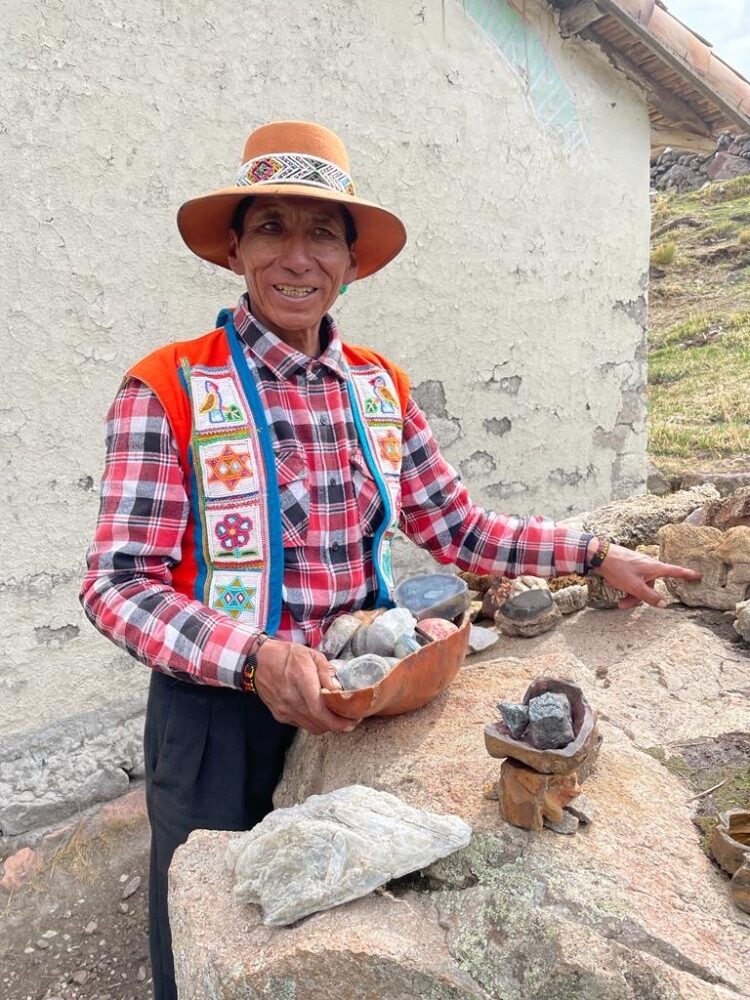
A central element of the programme is the training of local agricultural experts known in Quechua as Yachaq Runas – “the wise ones.” These dedicated farmers receive both practical and theoretical training in areas such as animal health, parasite management, organisational leadership, and sustainable livestock production. Beyond technical knowledge, they develop teaching skills and accompany other farming families in their communities, ensuring the continuity of Suyana’s initiatives even after project completion. The Yachaq Runa programme empowers rural communities from within, fostering cooperation, building stable structures that secure income – from production to direct marketing – and strengthening local resilience and leadership that drive lasting change.
Areas of focus:
Outcome and Impact
Running for over a decade in Peru, the Healthy Municipalities Programme has a track record of significant positive outcomes and sustainable impact for remote highland communities:
Health
Improved access to basic medical and dental care, together with greater awareness of healthy and nutritional habits, has led to better nutrition scores and quality of life. There has been a significant reduction in common oral diseases among students and the wider population, alongside fewer school absences due to health issues. Patient mindsets have shifted towards adopting hygiene practices, and through improved healthcare facilities and cooperation with partner hospitals, individuals with complex medical needs have been able to receive critical treatment.
Education
Enhanced educational standards and environments have resulted in better learning outcomes for children. Improved school infrastructure and healthier food in schools, supported by awareness campaigns and initiatives such as school gardens, have strengthened child development. Carpentry, marketing, and leadership workshops have expanded prospects in the labour market, while tailored teaching materials and interactive methods have created engaging classrooms that increase motivation and enthusiasm for learning.
Complementing the programme is our newest project, the Suyana School, which opens up new prospects for rural youth, equipping them with practical skills that improve employability and inspire them to contribute to their communities’ development.
Livelihoods
Enhanced agricultural practices and vocational training have increased family incomes and fostered sustainable economic development. Improved access to clean water and essential services such as sanitation and infrastructure has strengthened community well-being and resilience, while reducing vulnerability to climate change. At the same time, support for rural enterprises, financial management, and access to local markets has enabled families to build stronger and more self-sufficient economies.
Facts & Figures
2011-2023
impacted individuals
children recovered from malnutrition
children cavity-free
medical and dental check-ups
Join us in transforming the lives of Peru’s remote highland communities.
