
Education in Peru
Individuals, families and communities benefit from access to quality education through improved learning conditions, curricula & pedagogy and vocational skills.
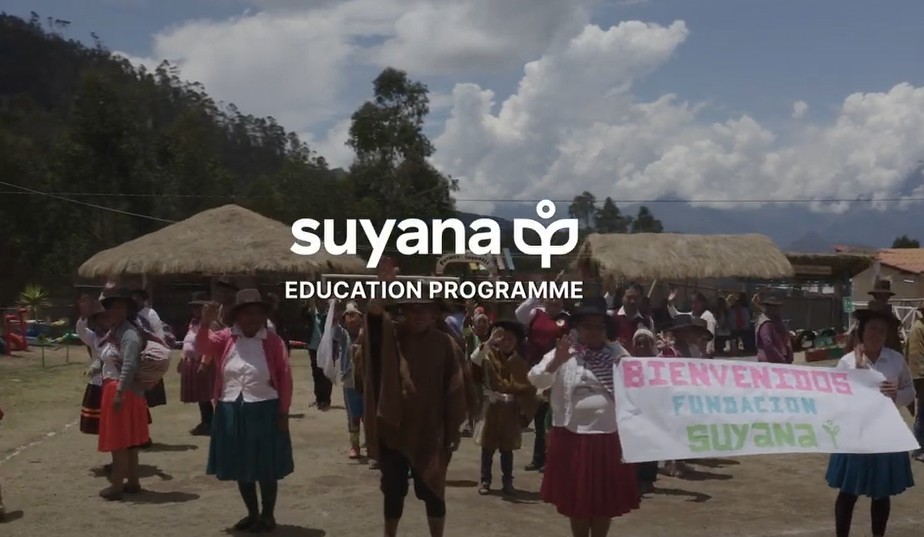
Through its Healthy Municipalities Programme, Suyana strengthens education in rural areas by fostering inclusive, healthy, and environmentally responsible learning environments, enhancing academic performance, and supporting life skills development such as problem-solving, critical thinking, and collaboration. Central to this effort is the Mi Linda Escuela strategy, which engages teachers, students, families, and local leaders to promote participatory and value-based learning.
Students also gain practical experience through a youth entrepreneurship component that turns local resources into small-scale ventures with economic and environmental benefits. In coordination with education authorities, schools demonstrating progress are formally recognised as Healthy Educational Institutions.
Key Initiatives
Creating Healthy & Inclusive Schools
Our approach focuses on creating safe, inclusive, and inspiring learning environments where children can thrive. This includes upgrading school infrastructure to ensure safety and accessibility, as well as improving sanitation facilities with gender-segregated bathrooms. Equal importance is given to providing clean drinking water and equipping schools with first-aid kits and emergency response training.
To promote healthy living and environmental awareness, schools are supported in developing green spaces, school gardens, and bio-gardens for fresh food production. Kitchens and dining areas are established to strengthen school nutrition, while waste separation and recycling systems encourage sustainable habits from an early age.
The learning experience is further enriched through the creation of open classrooms for interactive teaching, as well as reading corners and play areas that support literacy and creativity. Improved sports fields, playgrounds, and calisthenics parks ensure that children enjoy opportunities for physical activity and overall well-being.
What we do in practice:
- Upgrade school infrastructure for safety and accessibility
- Construct or improve sanitation facilities, including gender-segregated bathrooms
- Provide access to clean drinking water and first-aid equipment with emergency training
- Develop green spaces, school gardens, and bio-gardens for fresh food production
- Establish kitchens and dining areas to improve school nutrition
- Introduce waste separation and recycling systems to encourage sustainable habits
- Develop reading corners and play areas to support literacy and creativity
- Improve sports fields, playgrounds, and calisthenics parks for physical activity
Enhancing Learning through Materials & Skills Development
The programme strengthens education by combining academic learning with practical skills development. Educational materials are created and distributed in line with national curricula, ensuring that students have access to relevant and high-quality resources. Teachers benefit from continuous professional development, helping to sustain high standards of teaching and innovation in the classroom.
To expand future opportunities, students participate in workshops on entrepreneurship, business, project development, marketing, and technical skills. Schools are further equipped with carpentry areas, where practical abilities are developed alongside cognitive growth and problem-solving skills.
Learning achievements are celebrated and shared through school fairs, where students present their projects to the wider community. In parallel, assessment tools are introduced to monitor progress and evaluate the programme’s overall effectiveness.
What we do in practice:
- Create and distribute educational materials aligned with national curricula
- Provide continuous professional development for teachers
- Offer workshops on entrepreneurship, business, and technical skills
- Equip schools with carpentry areas for hands-on learning and problem-solving
- Organise school fairs to showcase student achievements and engage communities
- Introduce assessment tools to track student progress and programme effectiveness
Strengthening Public & Institutional Collaboration
The programme is implemented in close coordination with public institutions to ensure long-term impact and sustainability. Strong partnerships reinforce credibility, align activities with national priorities, and guarantee that progress continues beyond Suyana’s direct involvement.
Regional Education Directorates and Local Education Units (UGEL) play a central role in ensuring that all initiatives are consistent with national education policies and standards. Municipal governments contribute by supporting infrastructure improvements and investing in sustainability projects that benefit both schools and communities. In addition, Regional Labour and Employment Agencies strengthen the vocational training component, helping students gain marketable skills that prepare them for future employment.
What we do in practice:
- Coordinate closely with public institutions to ensure sustainability and long-term impact
- Align activities with national education policies and standards through Regional Education Directorates and Local Education Units (UGEL)
- Partner with municipal governments to improve infrastructure and fund sustainability projects
- Collaborate with Regional Labour and Employment Agencies to enhance vocational training and employability
Join us in transforming the lives of Peru’s remote highland communities.
